I hunt for obscure VHS tapes. Corporate training videos, local broadcasts with the commercials still in, instructional programs for hobbies I didn’t know needed instructional programs.
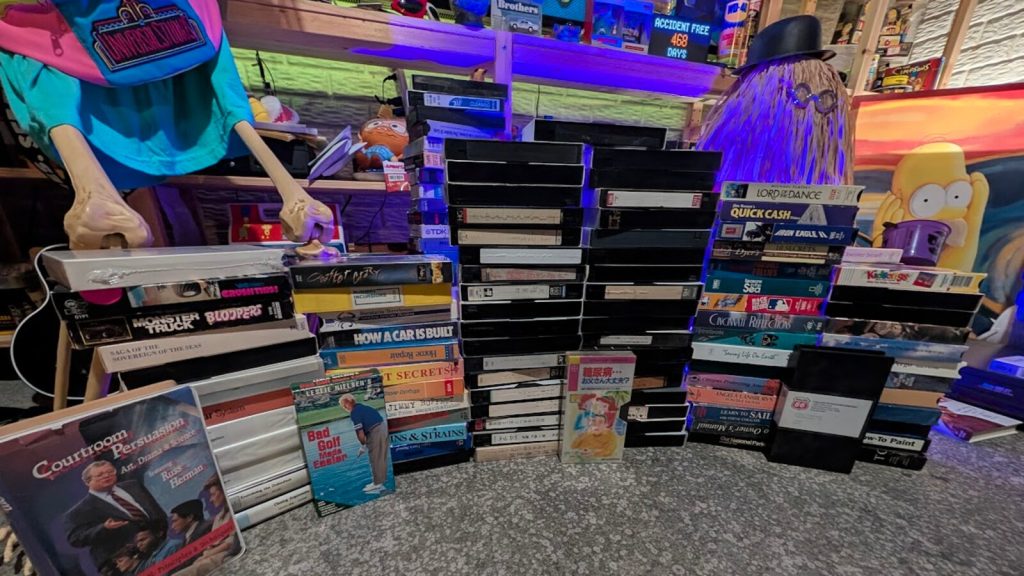
This guide is about finding those tapes, rather than collecting movie releases or paying antique-store prices for Disney clamshells.
Before YouTube, a company might use VHS to train employees or demonstrate a product. Libraries carried educational programs from small distributors. Someone recorded the local news, a sporting event, or six hours of television they meant to watch later.
That leaves a lot to look through beyond the movie shelf. A handwritten label marked NEWS or DO NOT ERASE gets my attention. So does a professionally printed tape from an organization I wouldn’t expect to have a video department.
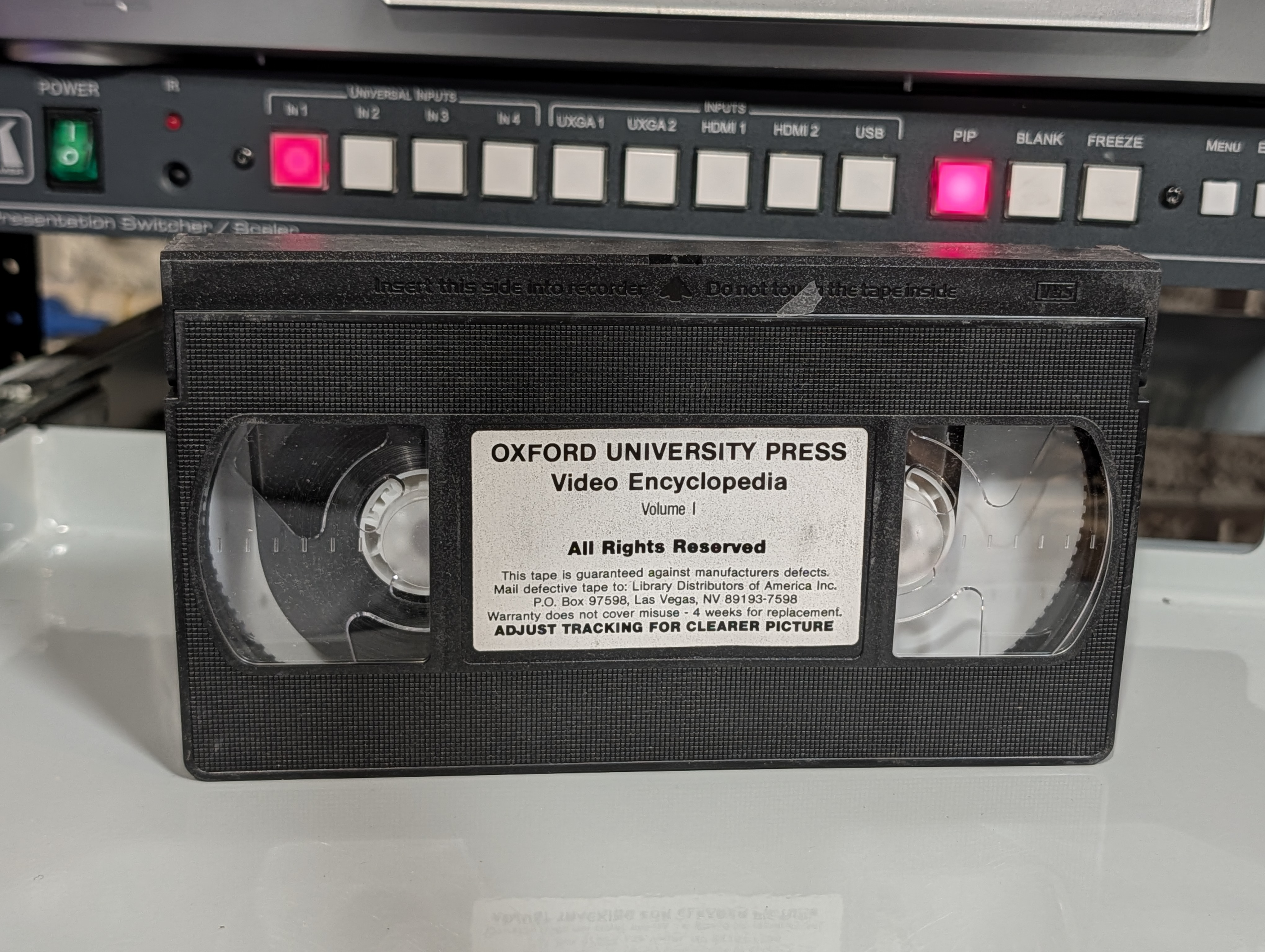
Some examples from the archive:
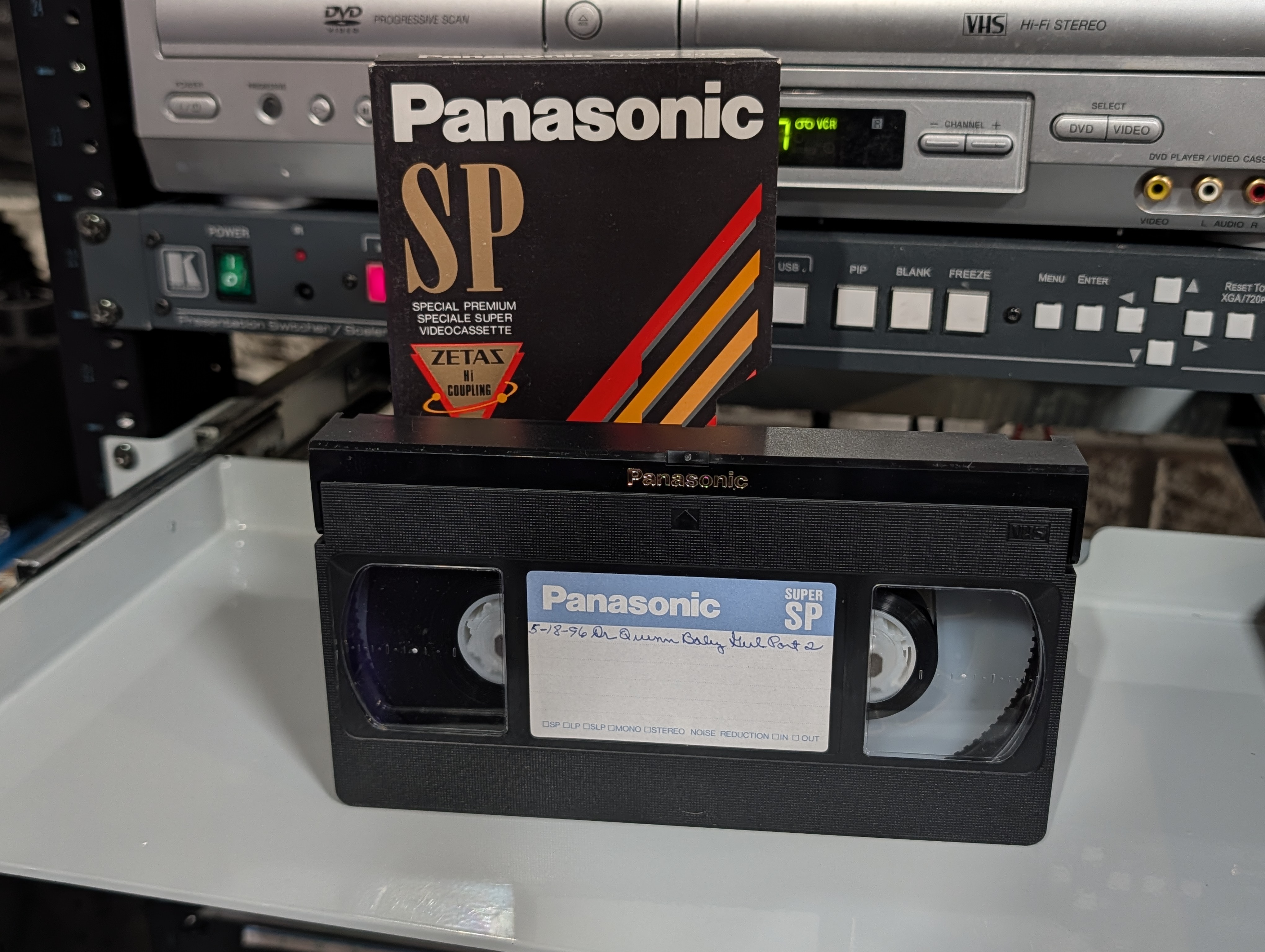
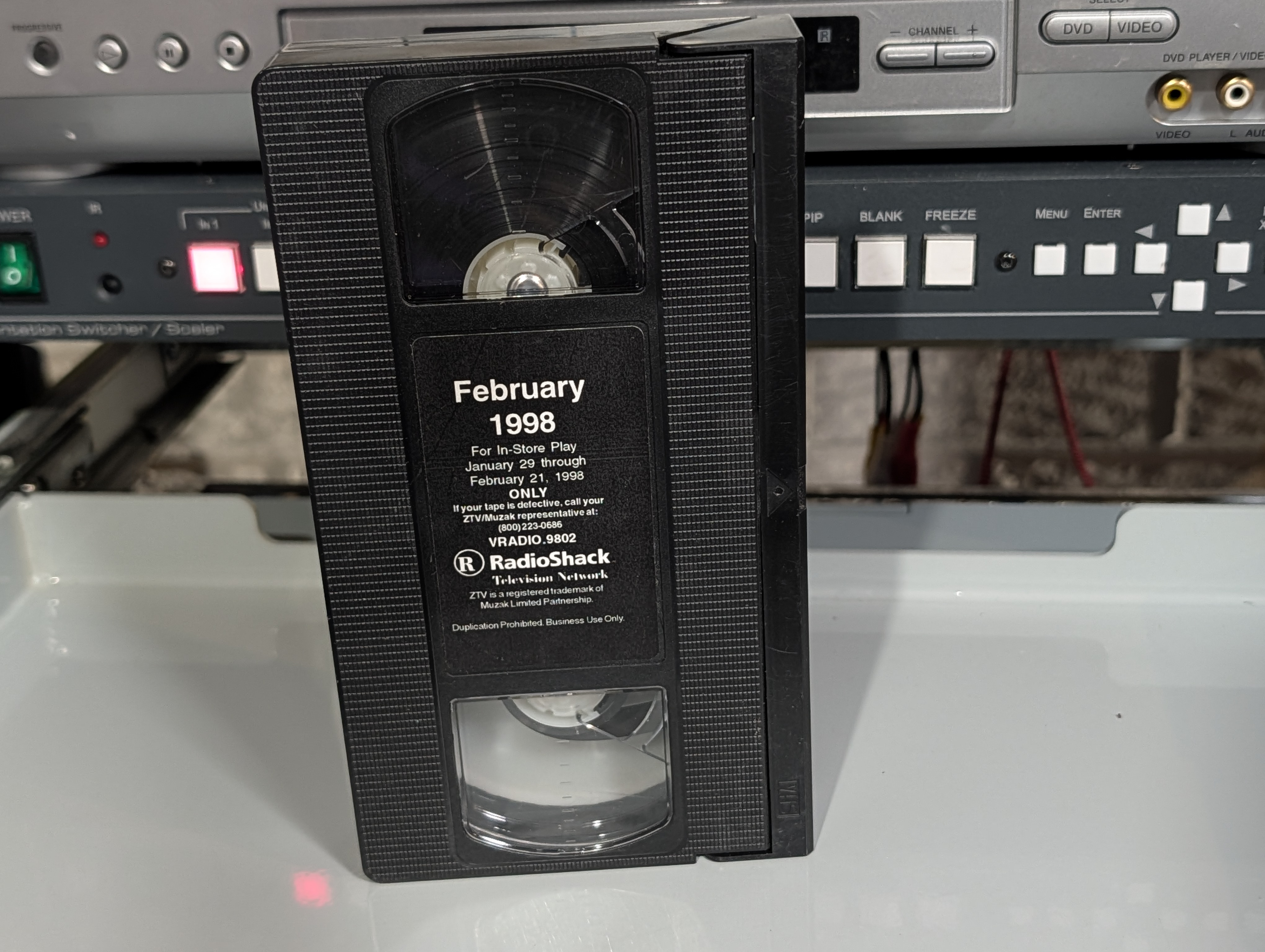
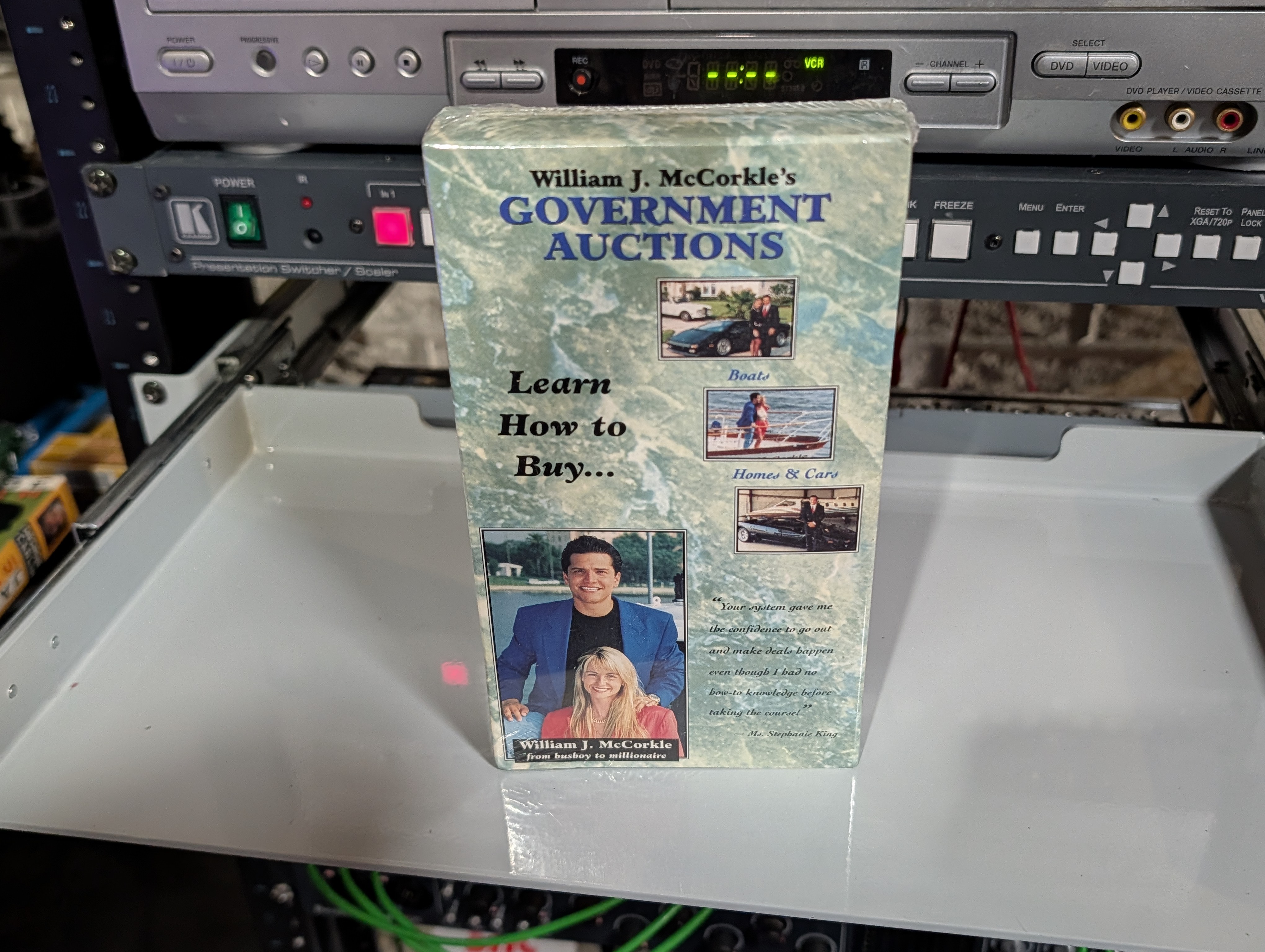
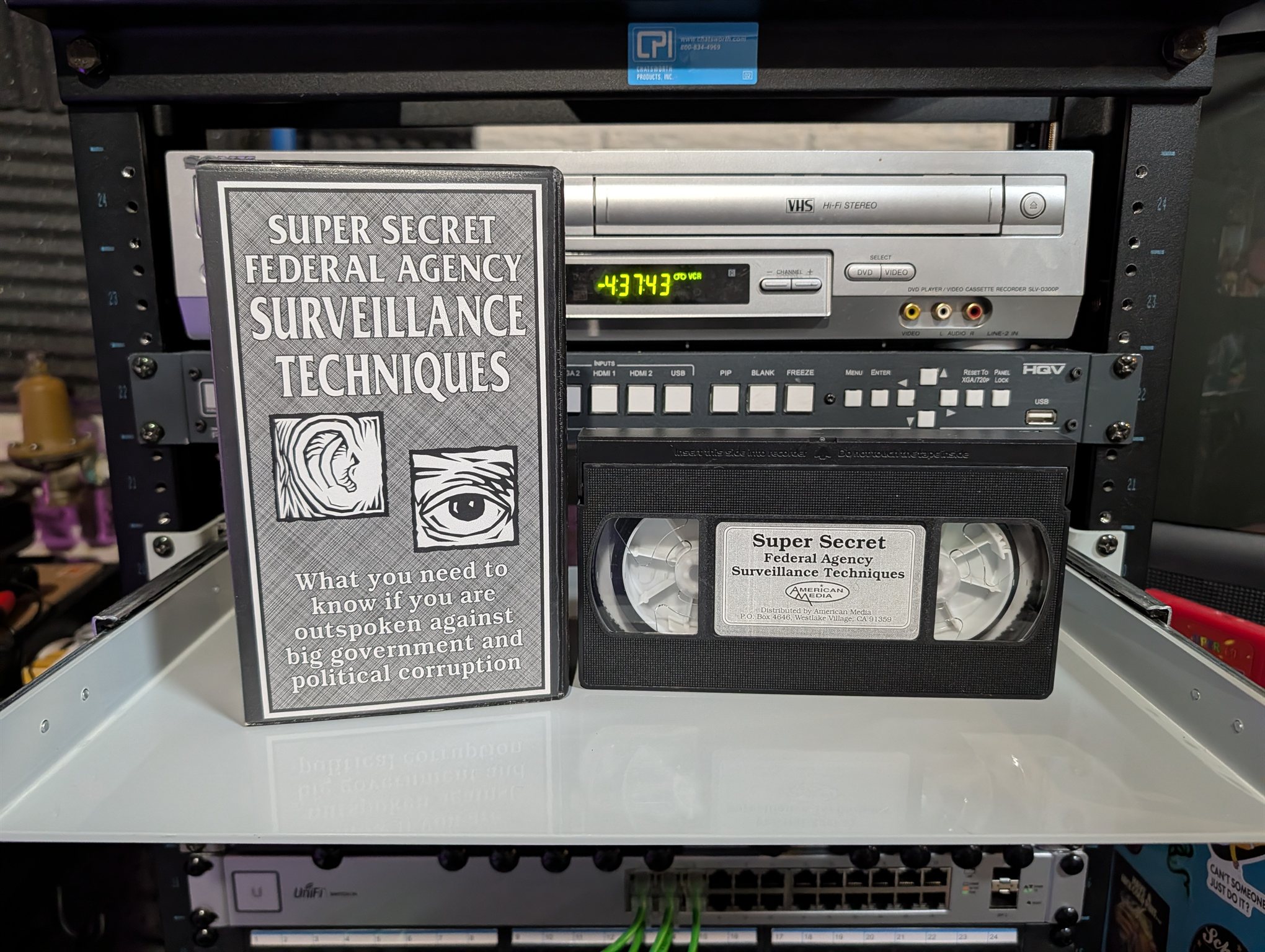
I use eBay, but some of my best sources are places where VHS is incidental to whatever else they sell. Start with the Goodwill bins.
The Goodwill bins
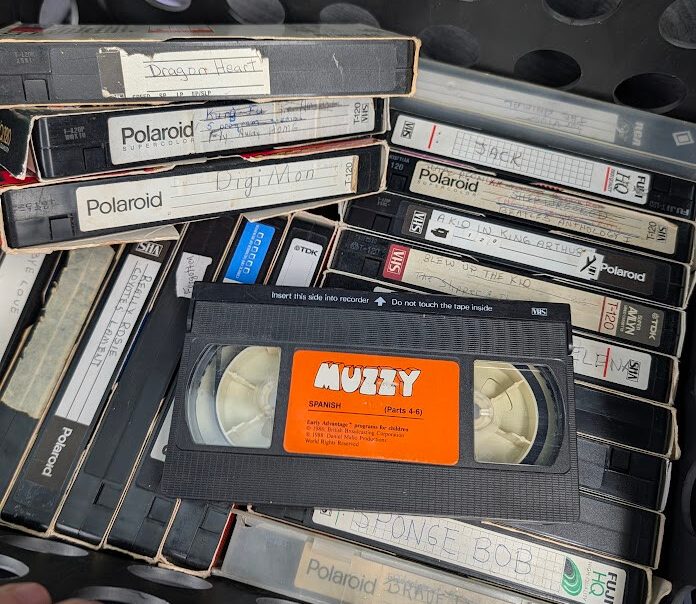
My best source right now is probably the Goodwill Outlet, better known as the bins.
If you’ve never been to one, it is not the normal Goodwill experience.
Stuff comes out in giant rolling bins. People dig through it. New bins appear. Everybody moves. Every location seems to develop its own rules, pricing, and level of chaos.
Wear gloves, but more importantly, learn your particular outlet. Some charge for certain things individually. Others sell by the pound. Some locations seem to get piles of media. Others barely get any. Learn the rhythm: when new bins roll out, when the media bins tend to appear, what the pricing actually is for tapes.
And don’t get caught up in the excitement and buy everything just because it’s cheap.
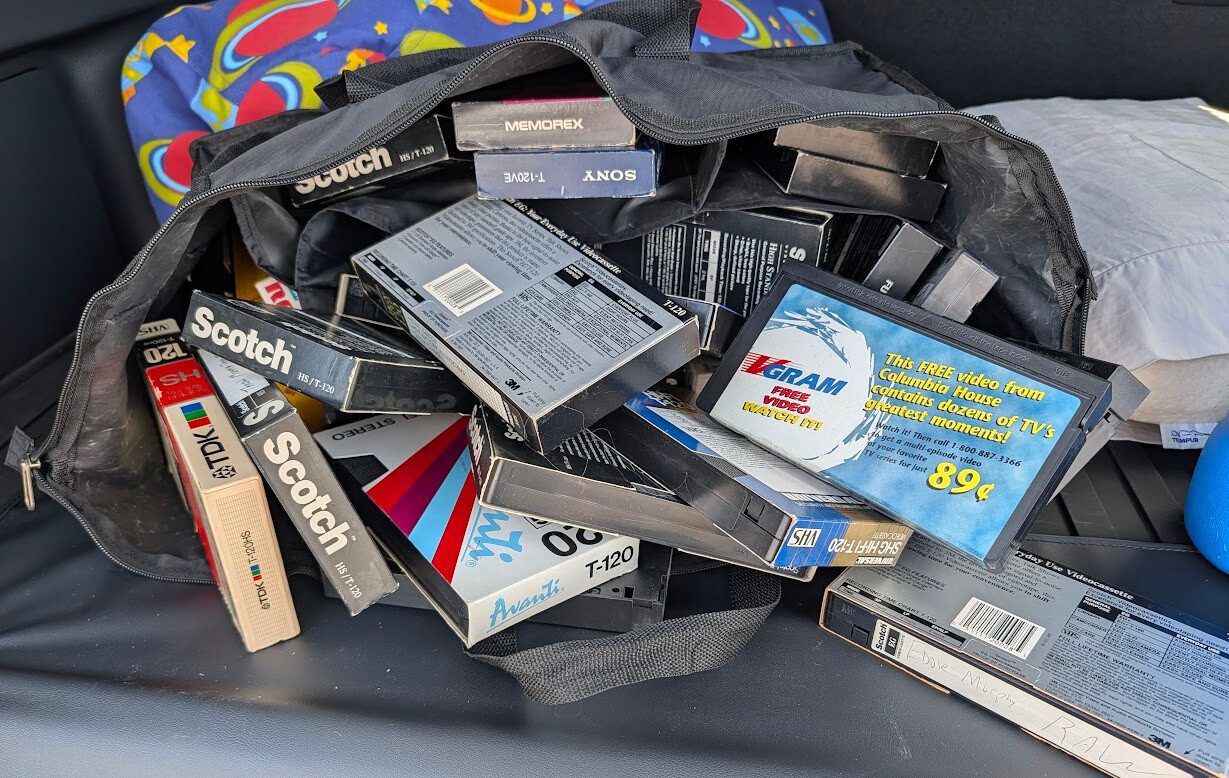
When you’re staring into a bin full of unlabeled Maxells, your brain will start trying to convince you that you need all 70 of them. You probably don’t.
Sometimes I walk in and leave with 100 tapes. Sometimes I leave with nothing. One empty visit doesn’t tell you much. Go back a few times and learn whether that location gets the kind of media you want.
For home recordings specifically, the bins can also be better than normal Goodwill retail stores because tapes sometimes make it through that would never be put on the regular store shelf.
Smaller thrift stores and charity shops
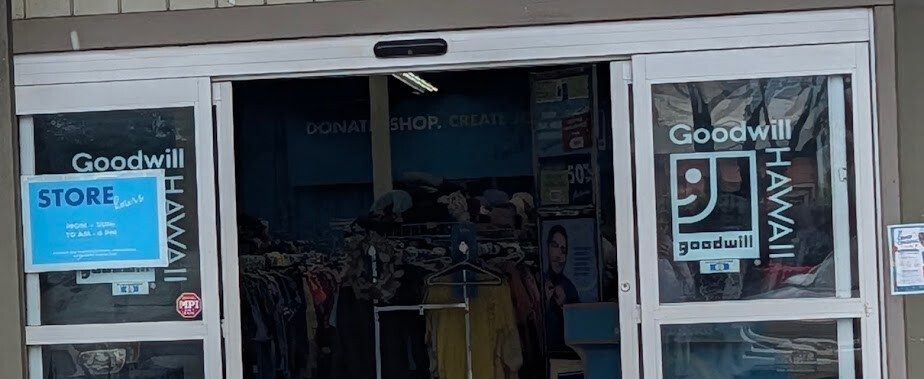
Regular thrift stores are still worth checking, but I tend to favor the smaller ones.
Large chains often have tighter rules about what they will sell. Home recorded tapes may be removed before they ever reach the floor.
Sometimes one sneaks through.
But if you’re specifically hunting weird VHS, smaller thrift stores can be much more interesting.
Think Salvation Army, St. Vincent de Paul, church thrift stores, regional chains, charity shops, and independent neighborhood stores. The less polished, the better. I’m looking for the places willing to put a little more “junk” on the shelf. Because the junk is the point.
Become a regular
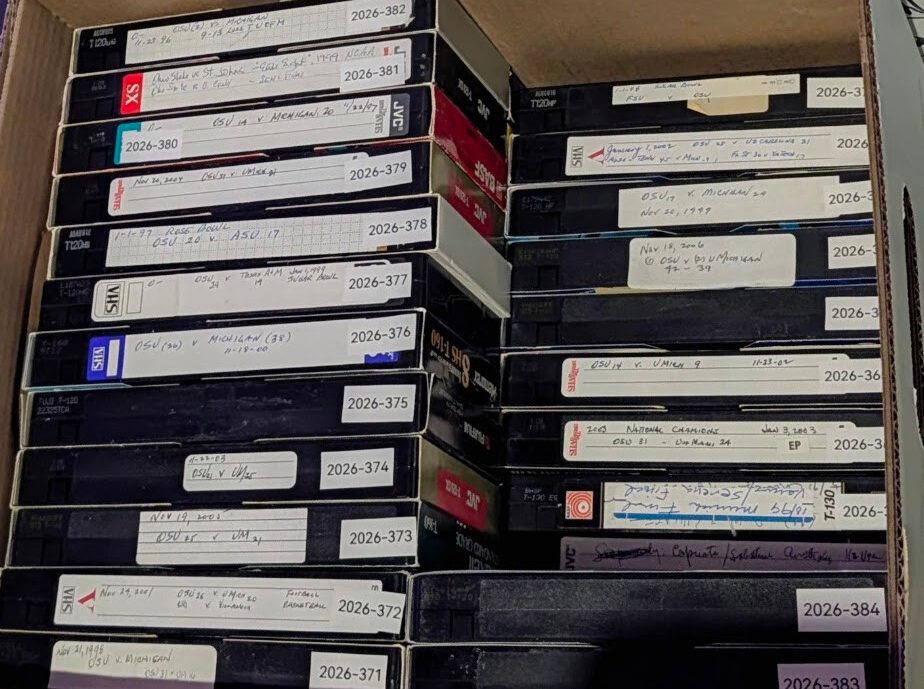
Get to know the people who work there. This matters way more than I realized when I started doing this.
I have places where I can walk in and somebody already has a box or bag of tapes waiting for me. Sometimes they’ll just give them to me because they know nobody else is going to buy them.
You don’t get there by walking in once and announcing that you’re a serious VHS preservationist who needs immediate access to the back room. Just be a good regular.
Talk to people. Learn names. Say thank you. Don’t make their job harder.
Bring some candy or baked goods once in a while because you appreciate them, not because you’re operating an elaborate VHS bribery program.
Eventually, somebody gets a cart full of tapes and thinks of you.
Friends of the Library
Don’t overlook Friends of the Library sales.
These aren’t necessarily where I expect to find somebody’s six-hour recording of Saturday morning cartoons, but they are excellent for another kind of obscure VHS.
Libraries accumulated a lot of video. Educational programs. Local history. Arts programming. Museum videos. Children’s material. Travel tapes. Documentaries from tiny distributors. Instructional programs. Things produced by universities, nonprofits, government agencies, and organizations that never expected to have an audience outside a library.
When libraries clear out old collections, some of that material makes its way to Friends of the Library sales.
And once again: talk to the volunteers.
Tell them you’re looking for old VHS, especially the weird educational stuff. They may know what’s in the back room. They may know what another branch just cleared out. They may have three more boxes that weren’t worth carrying onto the sales floor because nobody else wants them.
When people understand that you’re genuinely interested in the obsolete stuff they’re trying to get rid of, they can become surprisingly enthusiastic about helping you find more.
Stop looking for places that sell VHS
Look beyond stores that advertise VHS. Junk shops, furniture banks, and electronics recyclers can end up with tapes through donations and cleanouts. Some won’t sell media at all, but they’re worth asking.
Junk stores
You know the place. It isn’t really an antique store. It isn’t really a thrift store. It’s basically some guy who has been collecting stuff for 40 years and eventually acquired a building to put it all in.
Inventory doesn’t necessarily turn over quickly. Nobody has carefully researched everything. There are boxes that haven’t been touched in years.
Ask if they have VHS. Then ask if they have more VHS somewhere else.
The pile in the back is often much more interesting than whatever made it onto the shelf.
Habitat for Humanity ReStores
Most people think of Habitat ReStore as a place to buy cabinets, furniture, appliances, and building supplies.
That’s exactly why a VHS hunter should remember it.
Not every ReStore sells media, but some have books, records, DVDs, and VHS tucked into a corner somewhere. You might find the tape shelf sitting between a ceiling fan and a kitchen cabinet.
Furniture banks
Furniture banks are a perfect example of thinking about where tapes come from rather than who sells tapes.
Some furniture banks and similar organizations receive large household donations or participate in home cleanouts. And when an entire household gets cleared out, you don’t just get furniture.
You get books. Records. Electronics. Boxes from closets. And sometimes VHS tapes.
I’ve seen furniture-focused organizations with little corners full of books, records, and old media simply because those things came along with everything else.
These places probably aren’t advertising themselves as VHS sellers. That’s why they’re worth checking.
Antique malls
I’m talking specifically about the big antique malls where individual vendors rent booths. Those can be surprisingly useful.
A lot of the same people who buy storage units, clean out estates, hit auctions, or generally acquire random stuff eventually rent a booth somewhere.
In some ways, an antique mall is Facebook Marketplace without having to actually use Facebook Marketplace. You can just walk directly into the inventory.
Prices tend to be fixed, which can be a downside, but the bigger opportunity is identifying who has the tapes.
If one booth has 20 interesting VHS tapes, figure out who owns the booth. Grab a card. Ask the front desk if they can connect you.
Because those 20 tapes may not be the only tapes that person has.
The best thing you find in an antique mall might not be a VHS tape. It might be a VHS person.
Electronics recyclers
Electronics recyclers and e-waste companies can be excellent sources for corporate and institutional VHS.
Think about what happens when an office finally clears out a storage room full of old electronics. The CRT gets recycled. The VCR gets recycled. The old training tapes sitting next to them may come along for the ride.
Corporate training programs. Safety videos. Product demonstrations. Internal communications. Industrial material. Things that lived in cabinets for decades.
The problem is access. Many e-cyclers aren’t retail stores. You usually can’t stroll into the warehouse and start digging around. Their rules on access, security, and disposal are theirs, and they exist for reasons that have nothing to do with you.
This one is relationship territory. Ask politely what happens to old videotapes when they receive them. Some companies won’t be able to sell or give anything away. That’s fine.
But if you’re interested in corporate, industrial, or institutional media, this is a world worth trying to get into.
GovDeals
GovDeals is basically VHS hunting combined with government surplus procurement.
Every once in a while, something wonderfully bizarre appears. The problem is logistics.
The interesting listing may be three states away. The eight VHS tapes you want may be sitting on top of an entire pallet of equipment you don’t want. And they probably aren’t going to split the lot.
So before you bid, solve the pickup and disposal problem. Figure out how you’re getting there, what you’re doing with the rest of the pallet, and whether the tapes are worth the trip.
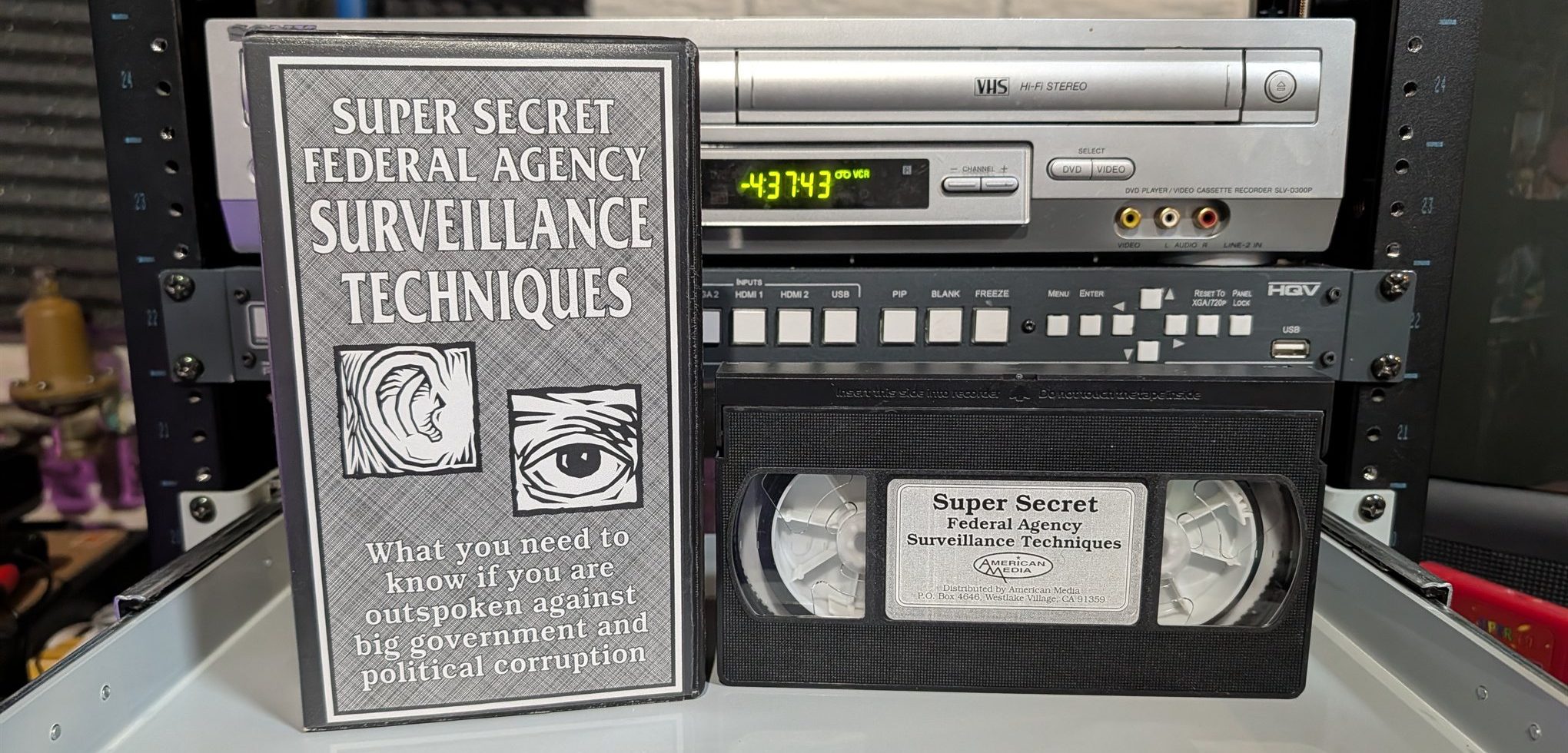
I’ve found government surplus material including a series on how to operate a polygraph machine. That is exactly the kind of nonsense I’m interested in.
But not every pallet is worth adopting because you spotted three VHS tapes in one blurry photograph.
Monitor the listings, search creatively, and pay very close attention to pickup requirements.
Facebook Marketplace
I hate Facebook Marketplace, and I’ve gotten very good results from it.
It puts you in touch with storage-unit buyers, cleanout people, and resellers who keep finding more stuff. Once they know you buy recorded VHS, they may contact you when another box turns up.
Getting there can involve vague descriptions, photos of everything except the labels, and wildly different ideas about what the tapes should cost. I don’t pursue it as much as I could because the back-and-forth wears me out.
Still available? followed by complete silence.
Estate sales, yard sales, and flea markets
These are all worth checking, but I wouldn’t build my entire VHS hunting strategy around them.
Estate sales can still be good, especially if you’re already interested in other collectibles. Look at the photos beforehand and plan a route where you can hit several sales. And look at the house. A home full of 1980s electronics, books, magazines, old stereo equipment, and media is more interesting to me than one where everything looks like it was purchased three years ago. You’re looking for households that kept things.
Yard sales used to be much better for me. I just don’t see old VHS showing up there as often as it once did. That doesn’t mean I won’t stop when I see tapes. I will. And always ask if they have more inside. There may be three boxes in the basement that nobody bothered carrying out.
Flea markets are even more of a crapshoot. Big boxes of cheap VHS are heavy, take up space, and aren’t particularly attractive inventory for most vendors. And when tapes do show up, sometimes somebody has decided every one of them is a rare collectible worth $10.
I’ll still look. I just don’t expect much.
What about eBay?
I still buy tapes on eBay. Shipping can make a cheap lot expensive, and some sellers have already pulled out the tapes they think are worth listing separately.
There are still poorly described listings and overlooked lots. Sometimes the interesting tape is barely visible in the photo. I’ve developed a few ways of finding those, but that’s another article.
Unfortunately, you have to talk to people
I’d rather dig through a bin than introduce myself to a stranger. But some of my best sources are people who know what I collect.
You don’t need a speech about lost media. Tell them:
“I collect old VHS tapes, especially home recordings and weird educational or training stuff. If you ever get boxes of them, I’m interested.”
Ask whether they have more than what’s on the shelf. If a vendor has interesting tapes, get their contact information. Thank the people who set things aside, and don’t make their jobs harder.
I have places where someone already has a box or bag waiting when I walk in. That came from showing up and getting to know people.
You’ll still drive across town and find six copies of Titanic and a moldy Tae Bo tape. But sometimes someone sees a box before it gets thrown out and remembers you want it.
Have obscure releases or home-recorded tapes you’re ready to part with? Send me a note.
VHS hunting checklist
- Find your nearest Goodwill Outlet and learn how it prices media.
- Check smaller thrift stores, Salvation Army, St. Vincent de Paul, church thrift stores, and local charity shops.
- Find Friends of the Library sales and used-book stores.
- Check Habitat for Humanity ReStores, furniture banks, and household donation centers.
- Search Maps for junk stores, resale warehouses, liquidation stores, and vendor-based antique malls.
- Ask electronics recyclers and e-waste companies whether they sell old videotapes.
- Check GovDeals and other government surplus listings. Solve pickup and disposal logistics before bidding.
- Check Facebook Marketplace for home-recorded VHS and tape lots.
- Review estate-sale photos before heading out. Check yard sales and flea markets when you’re already nearby.
- Ask whether there are more tapes in the back, and tell employees and volunteers what you collect.
- Get contact information from promising resellers and antique-mall vendors.
- Be willing to leave empty-handed and come back again.